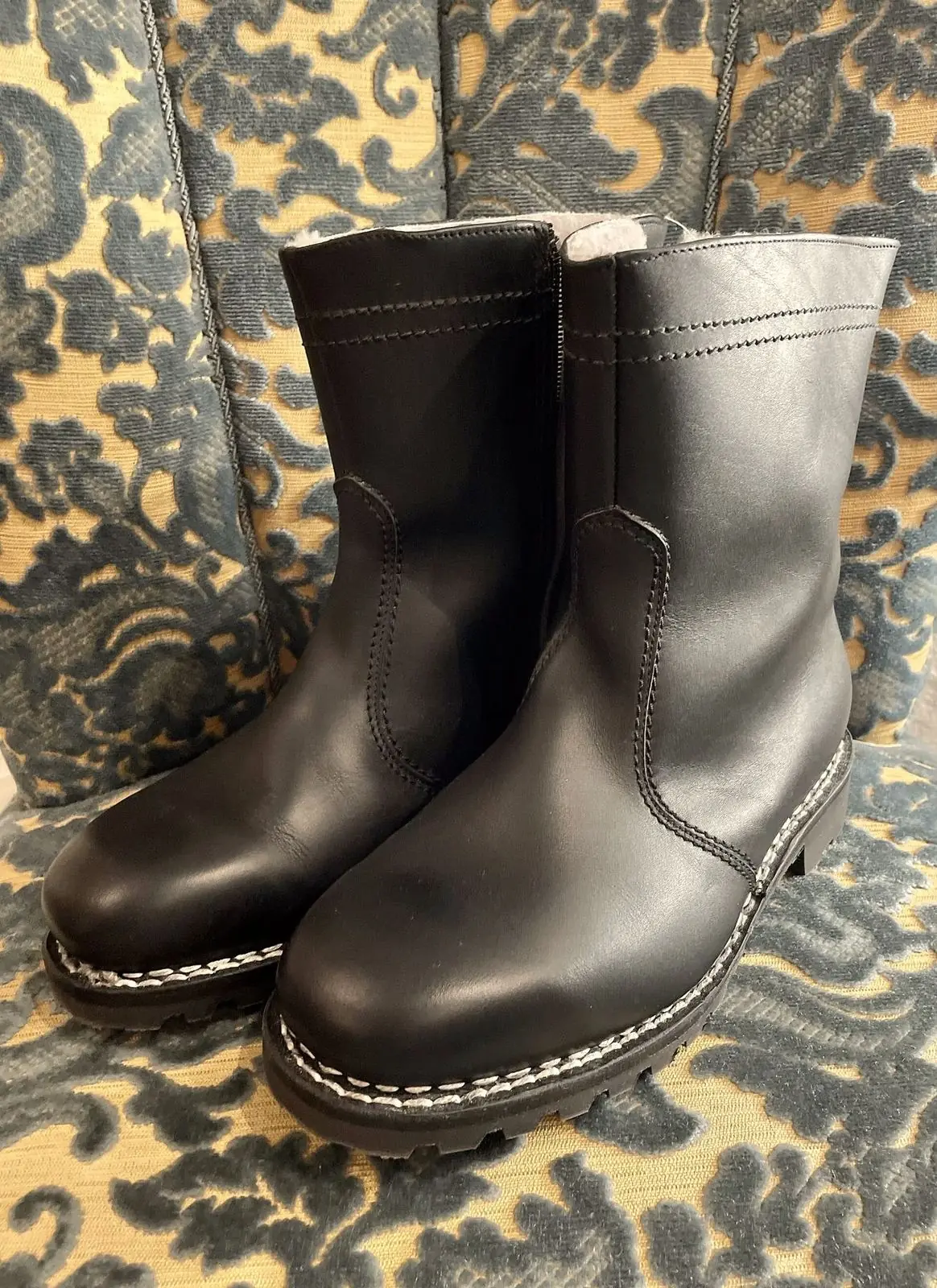
A good boot is never finished. It goes to the cobbler, comes back, and goes out again. A bad one goes in the bin. You can usually tell which is which before you pay.
Turn it over.
Real stitching around the sole means a cobbler can resole it, again and again. Glue only: sometimes fixable, usually not worth it. Careful, some glued soles have fake stitching moulded in.
Press the leather with your thumb.
Fine wrinkles that relax again mean full-grain leather. A plastic shine that stays stiff or shows pale lines means coated, lower-grade leather.
Look inside.
Leather lining, or no lining at all. Cheap fabric is a warning sign, unless it is a waterproof membrane.
Check the heel.
Layers of stacked leather, often with a rubber piece at the bottom. One moulded plastic block is a warning sign on a dress boot.

Four times yes? You don’t replace them. You resole them.
Shoegazing has a good guide on how often that works. More often than you think.