Every November the same scarf comes out of every drawer. Beige, black, a thin red line. You know the one.
I don’t have a problem with the scarf. I have a problem with what you pay for. Because the cashmere check is not woven by Burberry. It is woven in the north of Scotland, by a mill that has done it for more than a hundred years. Burberry says so itself.
A scarf is the cheapest way into really good cloth. It never has to fit. You wear it every day from November to March, and it is the one thing that touches your face. So it should be good. It doesn’t have to be famous.
Five mills the check crowd has never heard of.
Lochcarron
Selkirk, Scotland
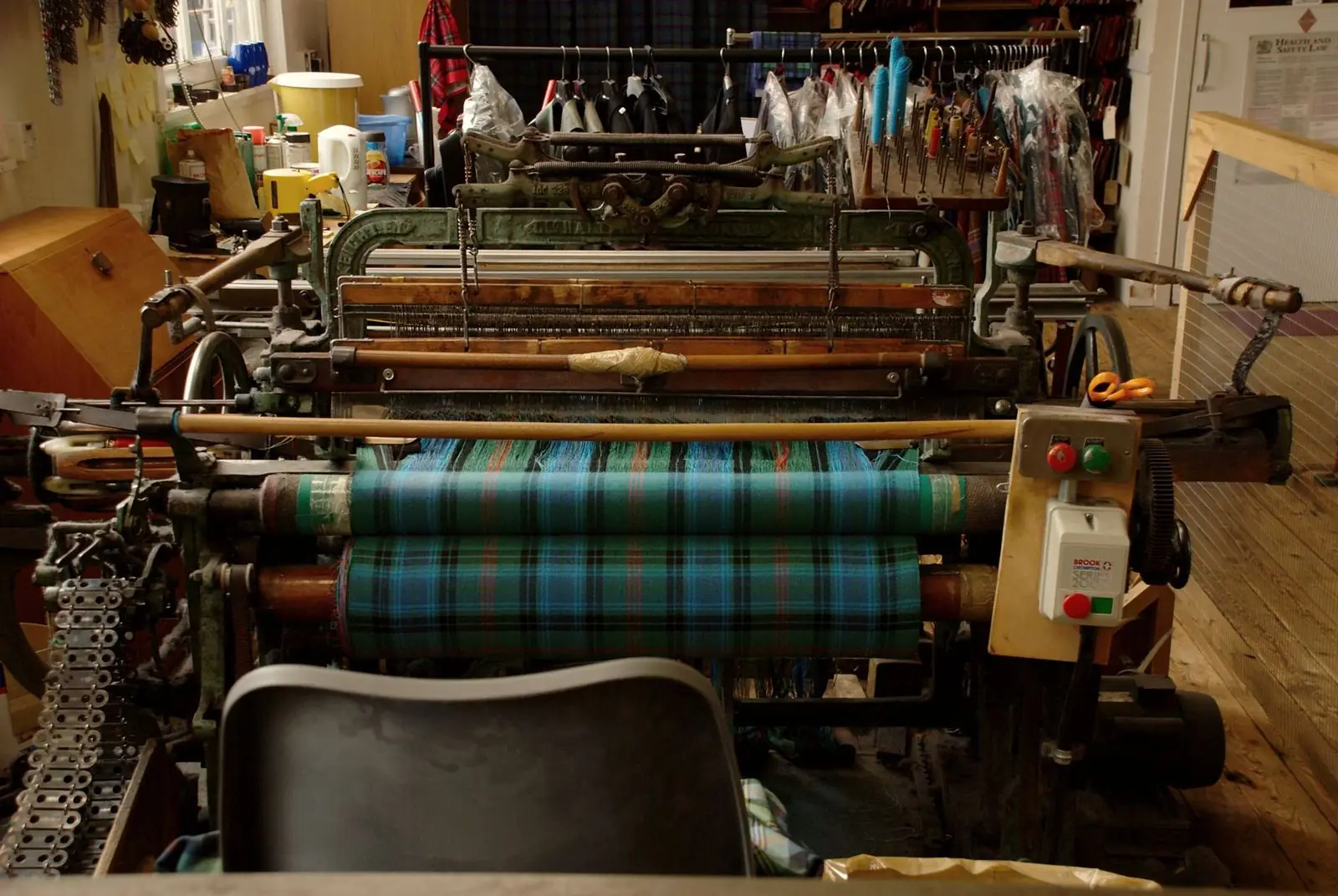
More than 500 tartans, all woven at one mill in Selkirk. Designed, dyed, warped, woven and checked there. If you want a pattern with a story, this is where the stories are kept.
Visit Lochcarron → Who owns it →Abraham Moon & Sons
Guiseley, England
Founded in 1837. Abraham Moon took his cloth to Leeds market by horse and cart. The Walsh family has owned the mill since 1920. Their checks look right on a man of twenty and on a man of seventy.
Visit Abraham Moon & Sons → Who owns it →Begg x Co
Ayr, Scotland
Made in Scotland since 1866, in Ayr since 1902. The firm says it moved there for the soft water running off the Ayrshire hills, and it still finishes the cloth with it.
Visit Begg x Co → Who owns it →
Joshua Ellis
Batley, England
The Ellis family started as clothiers in 1767. Their first big customers were armies that needed uniforms. The cloth is still brushed with teasels, which is where that rippled finish comes from.
Visit Joshua Ellis → Who owns it →Johnstons of Elgin
Elgin, Scotland
Since 1797. Only two owning families in all that time. And this is the one: Johnstons weaves the Burberry cashmere scarf. Burberry calls it its oldest partner. Every scarf goes through more than thirty steps on the looms in Elgin, and gets brushed with dried teasels at the end.
Visit Johnstons of Elgin → Who owns it →Same mill. No check.
What I look for
A name you can find on a map. A town, a river, a mill. Then the fringe. On a woven scarf the fringe is the warp left over from the loom, twisted so the weave can’t come apart. Then I touch it. Brushed cashmere feels like it has already been worn for a year. That’s the teasel.
Nobody will recognise it from across the street. The people who matter will recognise it up close.