The price tells you what the shop wants. These four things tell you what you’re getting.
Read the label inside.
Not the tag on the sleeve. The small one in the side seam. Wool fibre is crimped like a spring, which is why wool cloth resists creases and keeps its shape. A coat that is mostly polyester behaves like polyester, whatever the front says. If wool isn’t clearly the main fibre, I put it back.
Squeeze the sleeve. Hard.
Crush a fold of cloth in your fist for ten seconds and let go. Wool relaxes out of it within a minute or two. Polyester either keeps a hard crease or springs back unnaturally fast. It’s a hint, not proof. The label is the proof.
Flip the collar.
The underside of a tailored collar is traditionally faced with melton, a thick, heavily fulled wool that feels almost like felt. It is often cut on the bias, so it gives a little and stays hidden under the top collar. Find it, and somebody who knew what they were doing made that coat.
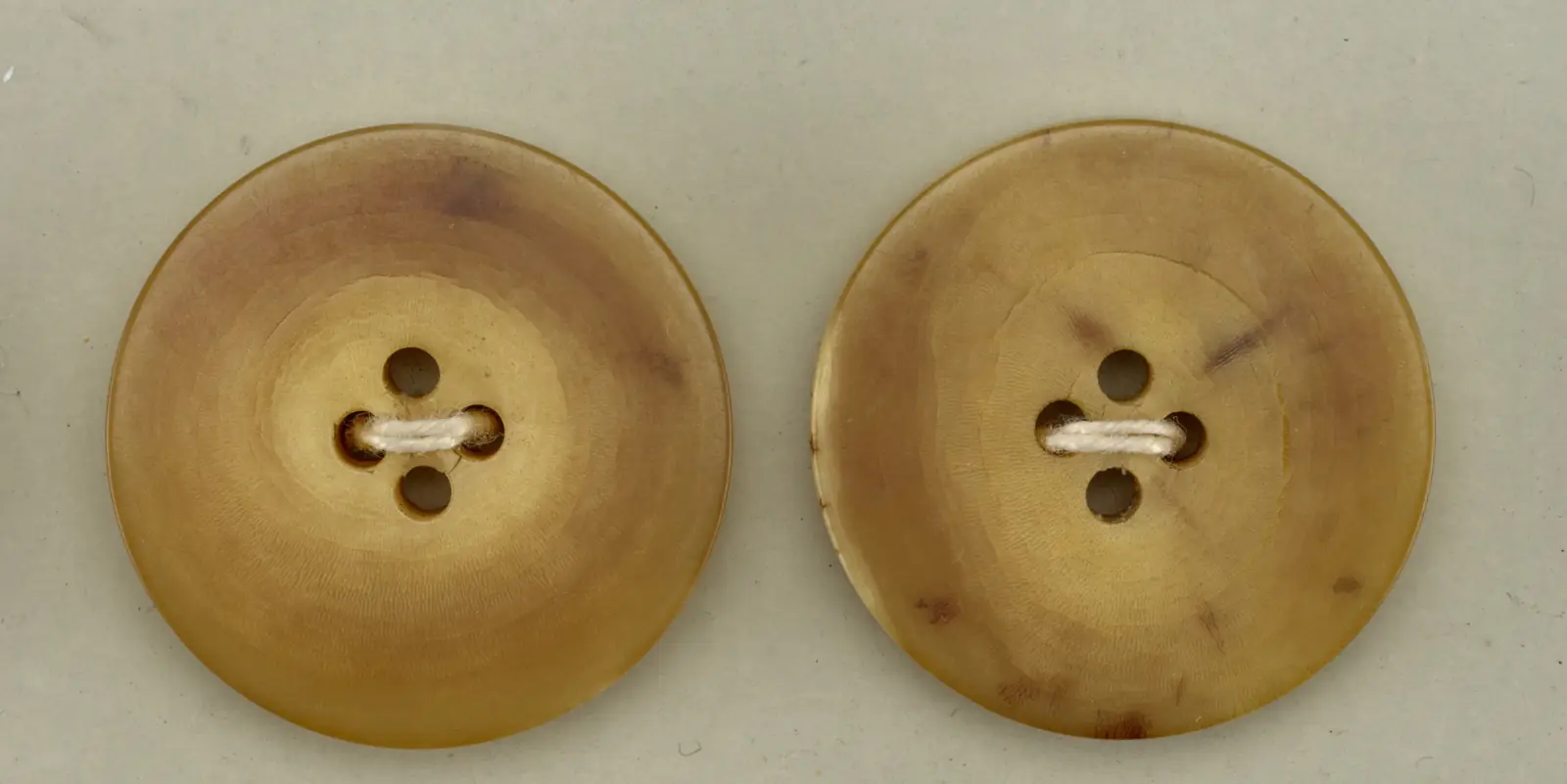
Look at the buttons.
Real horn is heavier than plastic and cooler to the touch, and the colour shifts a little from one button to the next. Plastic is perfectly identical. Perfect is the giveaway.
Four times yes? Buy it once. Wear it twenty years.
If you have eleven seconds: pinch the front just below the chest. A loose third layer floating between the cloth and the lining is probably a canvas. If the layers feel stuck together, the front is probably fused, which means glued. Not a perfect test. Still worth the extra second.
The same test for jumpers, and for boots.
The words on the label, the fit, and six coats I would buy again are all in The Coat Edit. A free guide, 15 pages.