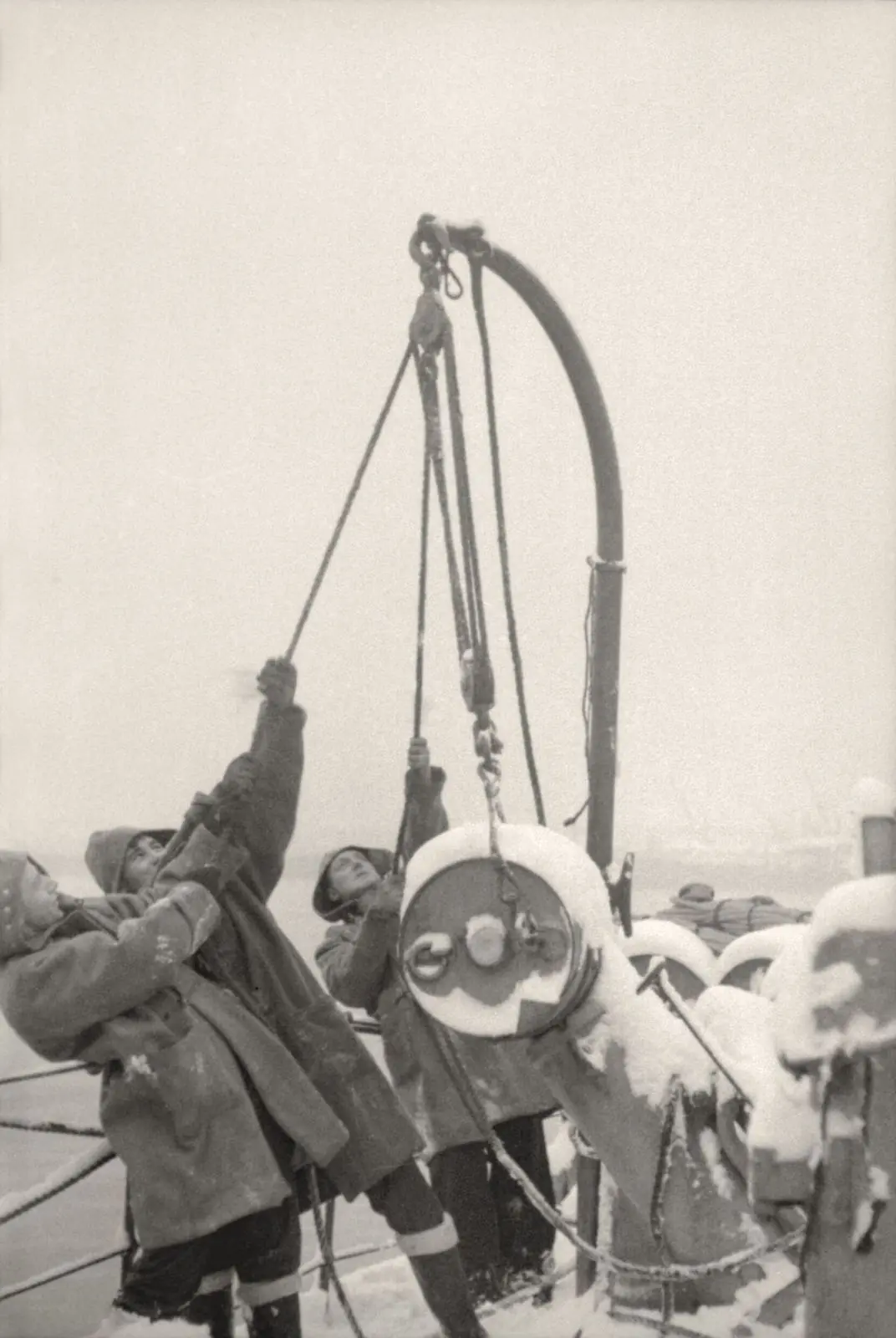
Almost nothing on an old piece of clothing is decoration. Somebody needed it. Usually somebody cold.
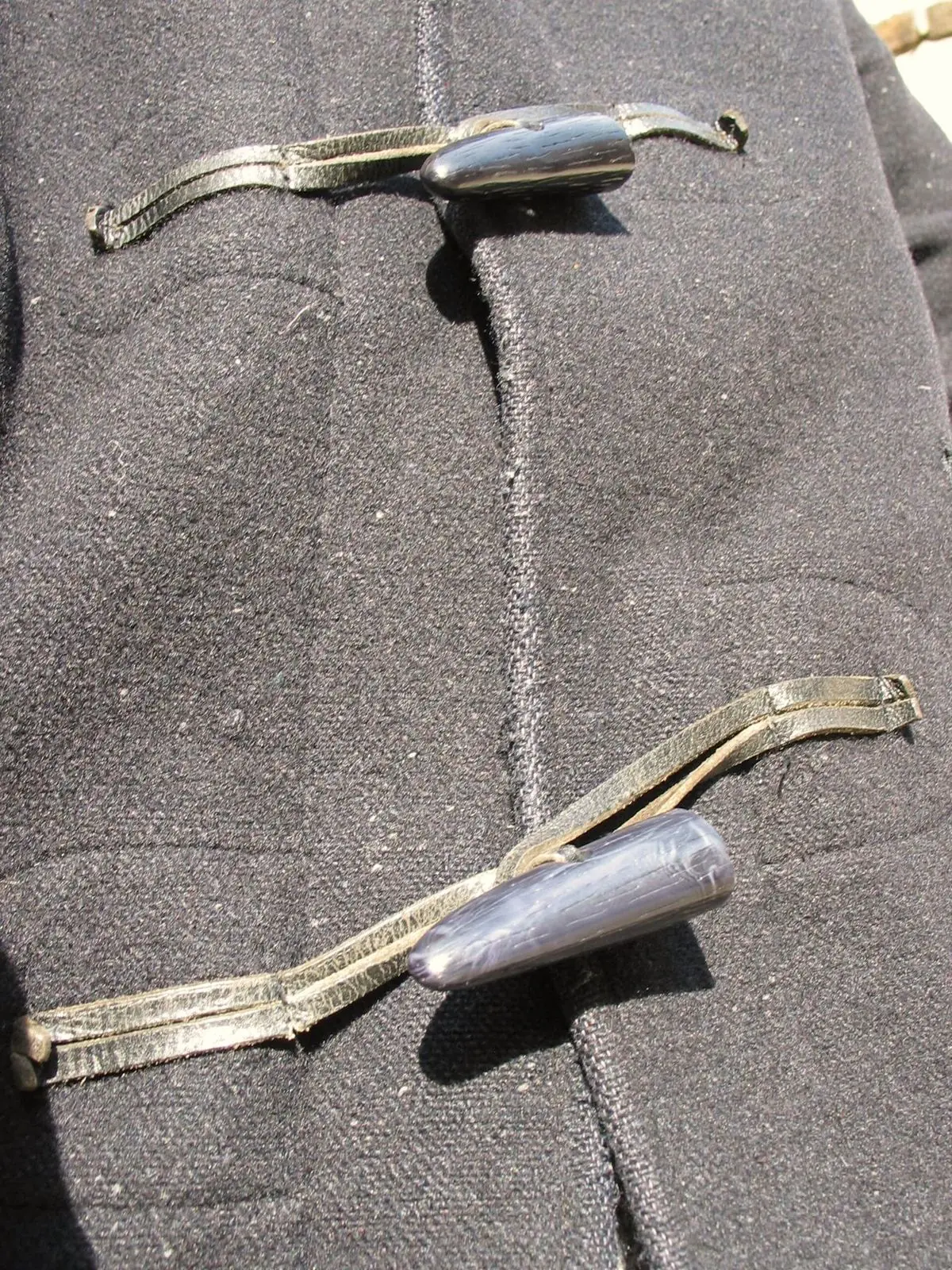
The toggles on a duffle coat.
Sailors could do them up with thick gloves on. The duffel coat came into naval uniform as foul-weather gear, for officers and sailors alike.
The fringe on a scarf.
On a woven scarf the fringe is the warp left over from the loom. Twisted or knotted, it locks the weave so the edge can’t fray.
The corduroy collar on a waxed jacket.
Waxed cotton is stiff and cold on bare skin. Corduroy is soft. It sits exactly where the jacket touches your neck.
The big collar on a peacoat.
A sailor’s coat. The wide collar turns up against the wind on deck.
Nothing on good clothes is there by accident.
Which is also the best argument against a logo. It’s the one thing on a jacket that doesn’t do anything. More on that here.